
Defining the Future of LITT with NeuroBlate® in Oncology1
Groundbreaking Evidence Published in the Journal of Clinical Oncology —
Prospective. Multicenter. Real‑World.
For the first time, NeuroBlate LITT outcomes from 787 patients across 25 U.S. centers have been prospectively captured, analyzed, and transformed into actionable clinical evidence. LAANTERN* moves beyond observation — it establishes the standard for LITT in the management of brain tumors.
Evidence Starts with Us
Eric C. Leuthardt, MD
Washington University School of Medicine
787
Patients outcomes
25
U.S. Centers
2015-2023
Enrollment Period
OUTCOMES TO INFORM YOUR PRACTICE
LAANTERN Establishes the Evidence Foundation for NeuroBlate LITT Across Tumor Types
LAANTERN represents the most rigorous prospective trial ever undertaken to establish oncologic outcomes of LITT. Under the leadership of Principal Investigator Dr. Eric Leuthardt, data from 787 patients across 25 U.S. centers were systematically collected and analyzed — transforming real-world surgical experience into evidence that is now practice-defining. These findings inform patient selection, referral timing, and multidisciplinary planning in ways that were not previously supported by data from a cohort of this size.
LAANTERN: Outcomes & Clinical Implications
Eric Leuthardt, MD
Washington University School of Medicine
Primary Investigator, LAANTERN
Real-World Evidence Across the Full Complexity of Brain Tumors
LAANTERN enrolled patients reflecting the true scope and complexity of real-world neurosurgical practice — the full range of tumor types, locations, and disease stages that clinicians encounter. This is not a selected or idealized cohort. These are your patients.
Median age 59.6 years, evenly split by gender
A real-world age and demographic distribution
56% primary tumors · 44% metastatic lesions
GBM and radiation necrosis among the most common etiologies
Predominantly recurrent disease
Spanning newly diagnosed through heavily pretreated patients
Deep and eloquent locations are well represented – where NeuroBlate offers an advantage over open resection
NeuroBlate LITT was used across a broad range of intracranial locations, including deep and eloquent brain regions that can present challenges for conventional surgical approaches
Heat map depicting locations of all newly diagnosed grade 4 GBM lesions*
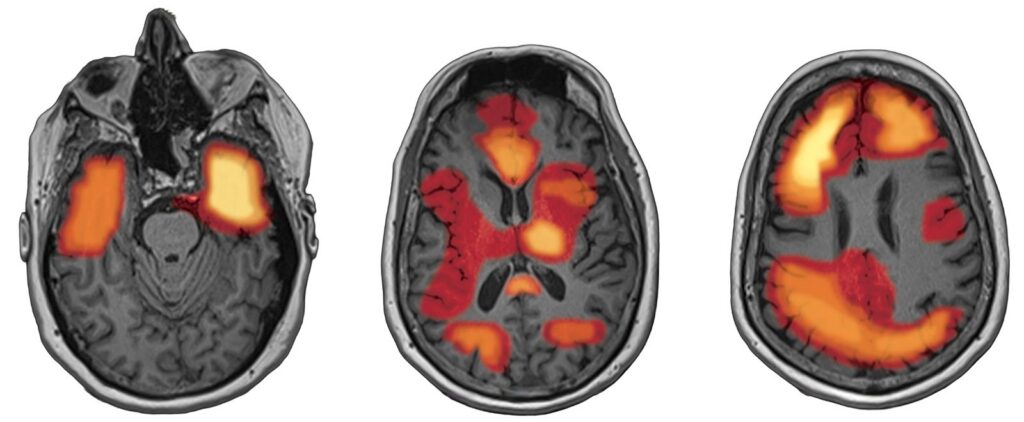
*Map does not directly indicate lesion size. Lesion locations are physician-reported.
Achieving ≥91% extent of ablation was associated with a 5.5× improvement in median PFS and a 5.8× improvement in median OS. Maximal cytoreduction is not just a technical goal — it is a survival imperative.
SURVIVAL OUTCOMES BY EXTENT OF ABLATION
Extent of Ablation Is a Survival Determinant in nGBM and rMets
PFS — Newly diagnosed grade 4 GBM
Procedure to progression or death by extent of ablation
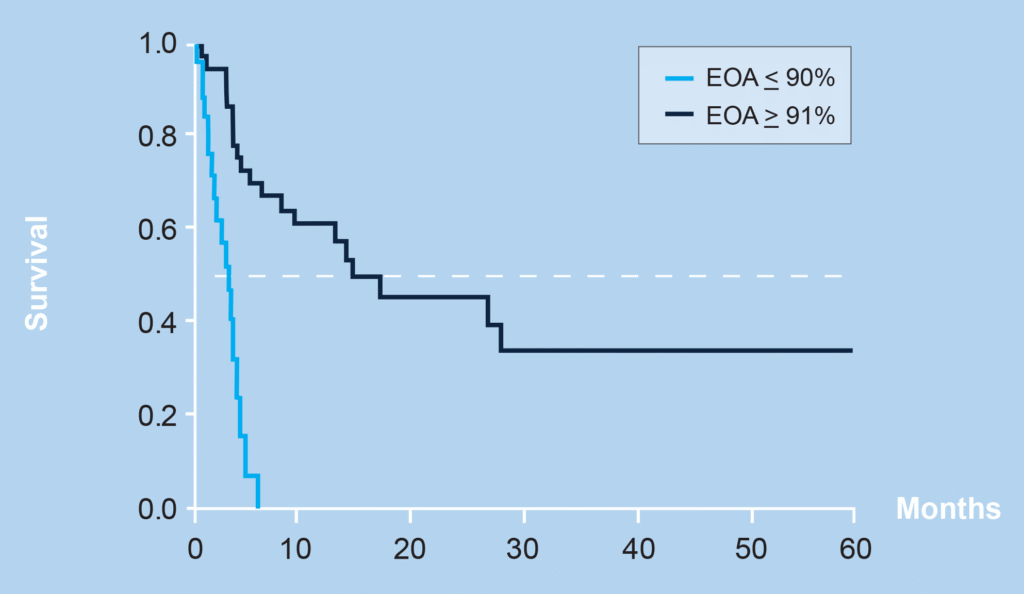
Median PFS: 15.84 months vs 2.88 months
OS — Newly diagnosed grade 4 GBM
Diagnosis to death by extent of ablation
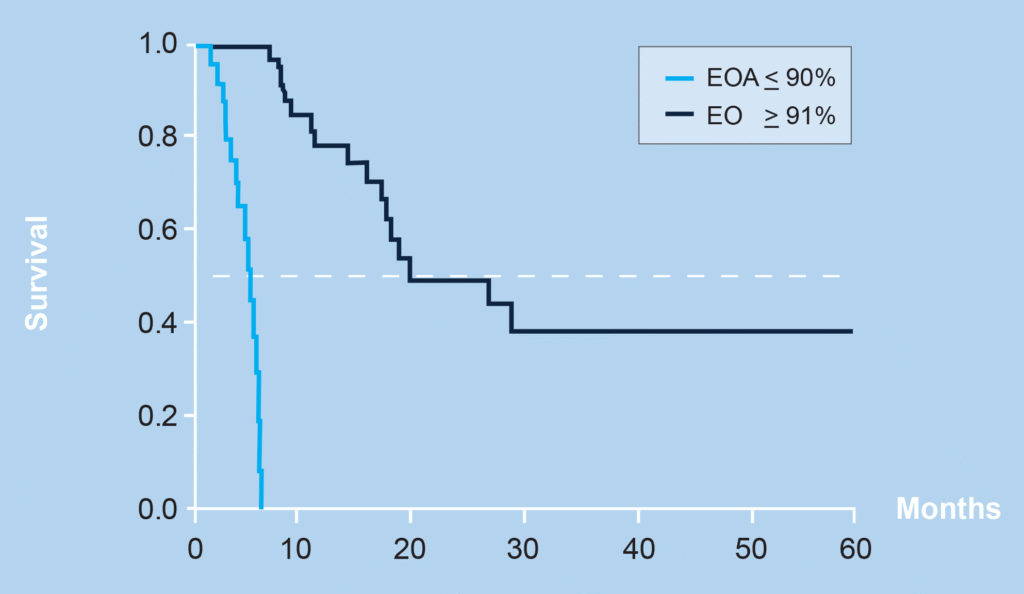
Median OS: 25.2 months vs 4.32 months
Achieving ≥91% ablation was associated with significantly longer PFS and OS in nGBM and rMets
Reinforces the importance of pre-surgical planning and the NeuroBlate software that enables maximal cytoreduction
Near‑total ablation was achieved in the majority of cases, demonstrating real-world feasibility of these survival results
Patients managed with smaller lesion volumes experienced 2.4× longer median PFS and 1.84× longer post-LITT OS. These data support the integration of NeuroBlate LITT earlier in the multidisciplinary care algorithm.
SURVIVAL OUTCOMES BY LESION VOLUME
Lesion Volume at Time of LITT is a Strong Predictor of Survival in Recurrent Brain Metastases
The case for earlier referral — now quantified in prospective data.
PFS — Recurrent metastases by lesion volume
Procedure to progression or death | Volume ≤ median vs > median
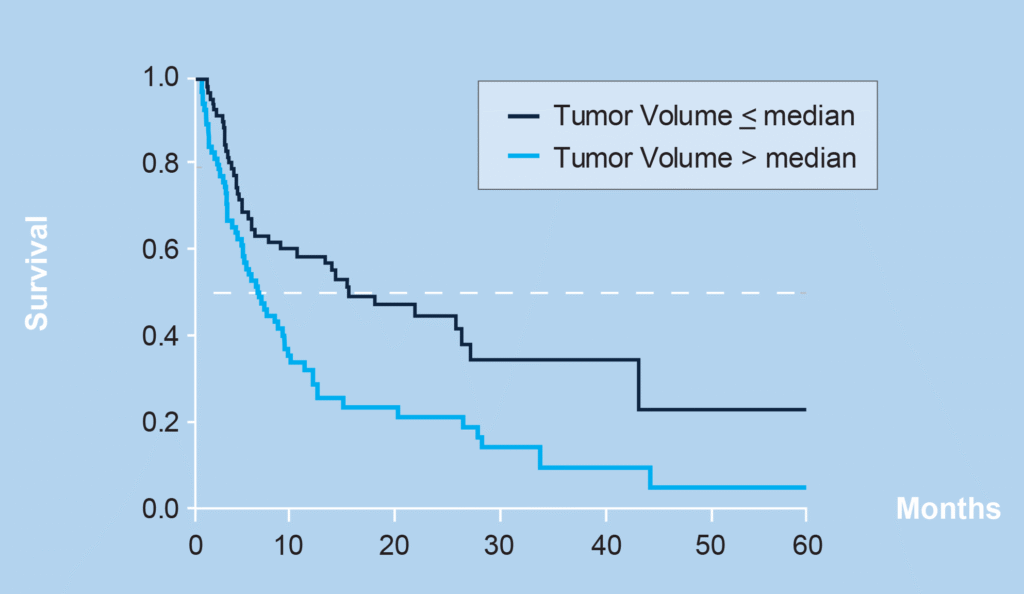
Median PFS: 14.4 months vs 6.0 months
OS — Recurrent metastases by lesion volume
Procedure to death | Volume ≤ median vs > median
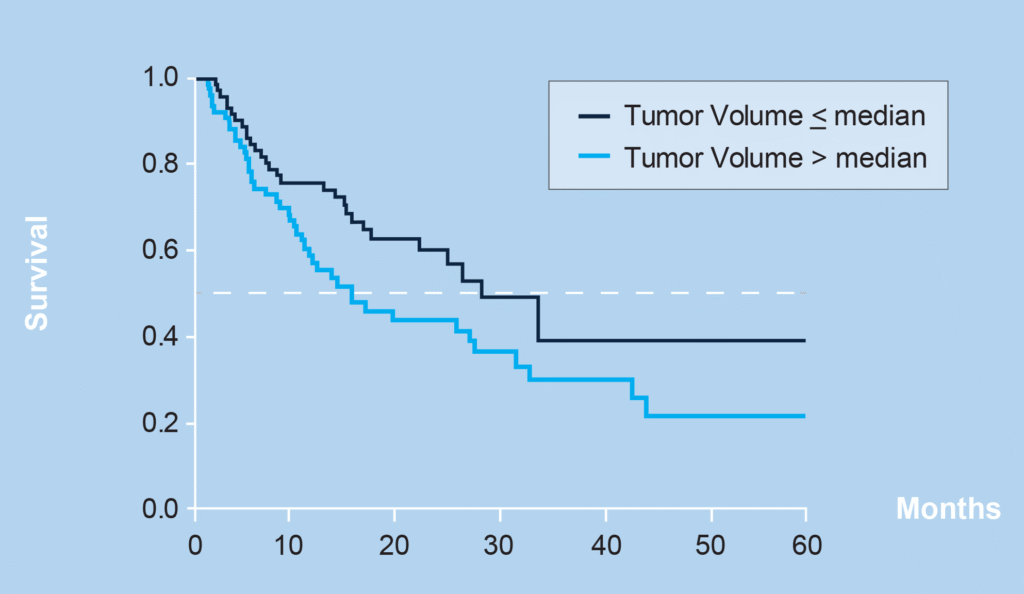
Post-LITT OS: 27.6 months vs 15.0 months
Smaller lesions were associated with meaningfully longer survival in recurrent brain metastases
Supports earlier referral for NeuroBlate LITT as part of a multidisciplinary care pathway
Favorable Safety Profile — Patients Experience Faster Recoveries with Fewer Complications2,3
Across 787 patients who underwent NeuroBlate LITT in real-world practice, the evidence demonstrated a post-procedural recovery profile consistent with a minimally invasive approach. Patients go home faster and experience fewer complications than craniotomy — making NeuroBlate an appropriate option for patients who cannot tolerate the burden of open resection.
Post-LITT Experience
32.4 hour
Median hospital stay
< 3.5%
30-day readmission rate
Limited ICU utilization
the majority of patients avoid intensive care entirely
Safety
12.8%
Per-person AE rate
(101/787 patients)
65.5%
AEs considered
transient
0.5%
Infection rate
NeuroBlate LITT Preserves What Matters Most:
Function and Quality of Life Over Time
Quality of life is not a secondary endpoint — it is a primary goal for patients with brain tumors. LAANTERN data demonstrate that NeuroBlate LITT delivers effective cytoreduction without compromising KPS, patient-reported outcomes, or seizure control through long-term follow-up.
Mean KPS Score Over Time — Preserved Above 80 Through 3 Years
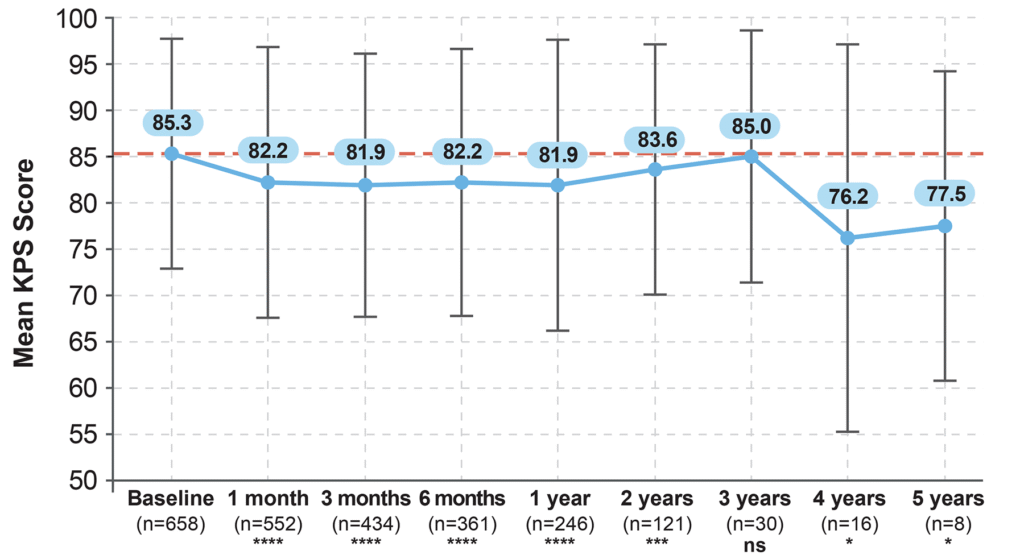
Error bars represent standard deviation (±SD).
Statistically significant change compared to baseline: ****p<0.0001, ***p<0.001, *p<0.05, ns=not significant
KPS preserved above 80
For the majority of patients through 3 years of follow-up
FACT-Br and
EQ-5D stable
Quality-of-life scores maintained through long-term follow-up
Seizure burden reduced
Observed across both primary and metastatic tumor cohorts
Limitations
> As a prospective registry study without a control arm, direct comparison to open resection or other interventions should be made cautiously.
> Heterogeneity in tumor pathology, lesion size, and institutional practice may limit conclusions regarding patient selection.
> Long‑term outcomes are constrained by declining follow‑up rates over time.
*About LAANTERN
LAANTERN (Laser Ablation of Abnormal Neurological Tissue Using Robotic NeuroBlate System, NCT02392078) is a post-market study designed to evaluate the performance and utilization of the NeuroBlate System to generate real-world evidence and guide standard-of-care practice. This is the first prospective multicenter laser ablation study. All sites operated under an IRB-approved protocol and received rigorous data monitoring to ensure quality and consistency. LAANTERN enrolled over 1,000 patients in the United States and followed them up to five years. Outcomes included safety, quality of life, health economics, procedural outcomes, seizure freedom, and survival.
1 Eric C. Leuthardt et al. Laser Interstitial Thermal Therapy for Brain Tumors: A Prospective Multicenter Analysis of Patients From the LAANTERN Study. J Clin Oncol 0, JCO-25-02604; doi.org/10.1200/JCO-25-02604
2 American Association of Neurological Surgeons and Congress of Neurological Surgeons Position Statement on Laser Interstitial Thermal Therapy for the Treatment of Brain Tumors and Radiation Necrosis. AANS-CNS_Position_Statement_Paper_LITT_Tumor-Oncology_090721.ashx
3 Kim A, Tatter A, Rao G, et al. Laser Ablation of Abnormal Neurological Tissue using Robotic NeuroBlate System (LAANTERN): 12-month outcomes and quality of life after brain tumor ablation. Neurosurgery. 2020. doi.org/10.1093/neuros/nyaa071